

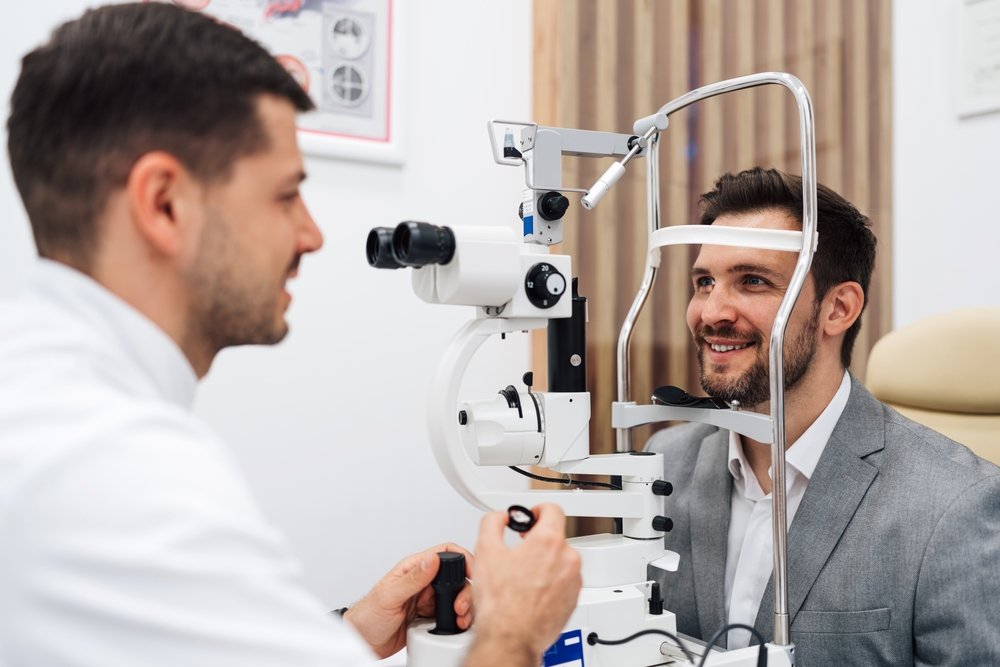
If your eyesight is generally stable, it is easy to wonder whether paying for vision coverage makes financial sense. Someone who only books a routine exam every year or two may not expect to use many benefits. However, eye insurance can sometimes provide value beyond the cost of the appointment itself, particularly if you also wear glasses, use contact lenses, or take advantage of discounts included with the plan.
Start With What You Actually Spend
The simplest way to judge whether a plan is worthwhile is to look at your normal eye care costs.
If you only pay for an occasional exam and rarely need new eyewear, the annual premium may cost more than simply paying for appointments yourself. In that situation, insurance may offer convenience, but not necessarily a financial saving.
The calculation becomes different for someone who replaces glasses regularly. Frames and lenses can quickly become the largest part of an eye care bill, especially when prescription lenses include additional features such as anti-reflective coatings, thinner materials, or progressive lenses.
A plan that contributes toward those costs may therefore be more useful than one that simply covers the exam.
Glasses and Contacts Can Change the Equation
People who wear contact lenses often have more predictable yearly expenses. Lenses, fittings, and replacement supplies can add up over time, meaning even a modest allowance may reduce overall spending.
The same applies to glasses. Some policies provide a fixed allowance toward frames, while others offer discounts at participating retailers.
The important thing is to look at the details rather than the headline benefit. A generous-looking allowance may only be available every two years, while certain lens types or upgrades may not be included at all.
Check the Provider Network
Another factor that can easily be overlooked is where the policy can actually be used.
Many plans have a network of participating optometrists and retailers. Using providers outside that network may reduce the available benefit or leave you paying more out of pocket.
If you already have an eye doctor you prefer, checking whether they participate in the plan can be just as important as comparing premiums.
Routine Exams Still Have Value
Even when your prescription has barely changed, regular eye exams can still be worthwhile.
An examination is not only about deciding whether you need stronger glasses. Eye professionals may also notice changes in eye health that are not producing obvious symptoms.
That said, believing regular exams are important does not automatically mean you need insurance. You can still choose to pay for routine care directly if that works out cheaper.
Look at the Whole Year
The best comparison is between the total yearly premium and what you are realistically likely to spend.
Consider your usual exam frequency, how often you buy glasses, whether you wear contacts, and what extras you normally choose. Then compare those costs with what the policy would genuinely pay toward them.
For someone who only needs an occasional routine exam, paying out of pocket may be the more economical choice. For someone who regularly buys eyewear or contact lenses, however, a vision plan may offer enough additional benefits to justify the cost.
Ultimately, the question is not simply whether you need an eye exam. It is whether the benefits you are likely to use are worth more to you than the price of the coverage.
